

Remember those days when a simple kitchen experiment could feel like pure magic? I sure do! There’s something so special about gathering a few everyday ingredients and creating a little bit of wonder. Today, I want to share a classic that never fails to bring smiles, especially to the little ones (or even the young at heart!). It’s called the Baking Soda Balloon Experiment, and it’s ridiculously easy, incredibly fun, and a guaranteed hit.
This is one of those activities that’s perfect for a rainy afternoon, a home school science lesson, or just a fun way to break up the routine. It’s like a mini science show right in your kitchen, and the best part? You probably have all the ingredients already!
Why You’ll Love the Baking Soda Balloon Experiment
- Fast: You can set it up and see the magic happen in minutes!
- Easy: Super simple steps that even young kids can help with.
- Giftable: While not a physical gift, it’s a fantastic experience gift for family fun.
- Crowd-pleasing: Kids and adults alike are mesmerized by the inflating balloon!
Ingredients
You only need a few things you likely already have in your pantry and craft drawer:
- 1 balloon (any color you like!)
- 1 small plastic bottle (like a water bottle or soda bottle)
- 2–3 tablespoons baking soda (this is the magical ingredient!)
- 1/2 cup vinegar (white vinegar works best)
- Optional: food coloring, glitter, or a drop of essential oil (for extra pizzazz!)
How to Make the Baking Soda Balloon Experiment Happen
Alright, let’s get our science hats on! It’s time to create some kitchen magic.
-
Prep the Balloon: Grab your balloon and a funnel. Carefully add 2–3 tablespoons of baking soda into the balloon. It might be a little tricky, but a funnel makes it so much easier! Once it’s in, give the balloon a little shake to make sure the baking soda is settled at the bottom.
-
Vinegar Time: Take your plastic bottle and pour in about 1/2 cup of vinegar. If you’re feeling fancy, this is the time to add a few drops of food coloring, a sprinkle of glitter, or even a tiny drop of essential oil for a nice scent. Just give it a gentle swirl.
-
Attach the Balloon: Now, carefully stretch the opening of the balloon over the mouth of the plastic bottle. Make sure you get a nice, tight seal! It’s important that the baking soda doesn’t fall into the vinegar just yet. You want to keep them separate for a moment.
-
The Big Reveal! When you’re ready, gently lift the balloon upright. This will allow all that baking soda to tumble down into the vinegar. Watch what happens! You’ll see a fizzy reaction, and as the gas is released, it will start to inflate your balloon. It’s like a science party in a bottle!
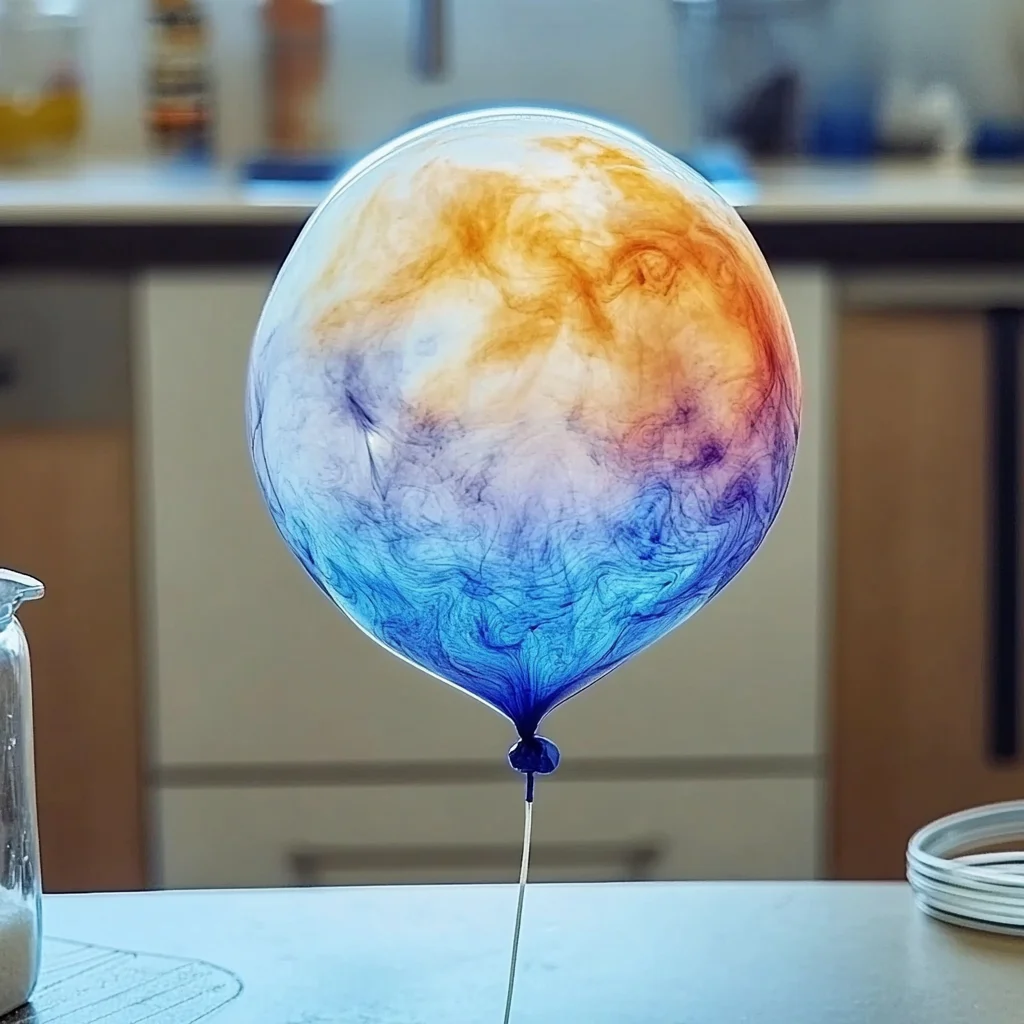
Isn’t that neat? The reaction between the baking soda and vinegar creates carbon dioxide gas, and that gas has to go somewhere – so it fills up the balloon!
Substitutions & Additions
Want to switch things up or make it even more exciting? I love getting creative with recipes and experiments!
- Vinegar Color: While white vinegar is standard, you can experiment with other types of vinegar like apple cider vinegar, but be aware it might change the color slightly.
- Bottle Size: A slightly larger bottle might give the reaction more room to bubble, but a small one works perfectly fine for inflating the balloon.
- Baking Soda Amount: You can experiment with slightly more or less baking soda to see how it affects the balloon inflation. Just remember not to overfill the bottle!
- Add Some Sparkle: As mentioned, glitter or even edible glitter is a fun addition for a bit of sparkle.
- Scented Fun: A drop of your favorite essential oil (like lavender or peppermint) can add a lovely aroma to the experience.
Tips for Success
A few little tricks can make your Baking Soda Balloon Experiment even smoother:
- Use a Funnel: Seriously, it’s a lifesaver for getting the baking soda into the balloon without making a mess.
- Tight Seal is Key: Make sure the balloon is stretched all the way over the bottle opening to prevent gas from escaping.
- Don’t Overfill: Too much baking soda or vinegar can cause the bottle to overflow, which is less magical and more messy!
- Adult Supervision: Even though it’s a simple experiment, it’s always a good idea to have an adult nearby, especially when working with vinegar and young children.
- Practice Makes Perfect: If your first attempt doesn’t inflate the balloon as much as you’d hoped, don’t worry! Adjust the amounts of baking soda and vinegar slightly for your next try. You might find inspiration by looking at other fun kitchen science like our DIY Bioplastic Suncatchers for another creative craft.
How to Store the Baking Soda Balloon Experiment
This experiment is best enjoyed fresh! Once the baking soda and vinegar have reacted, the gas has been released, and the balloon will stay inflated for a while. You can keep the inflated balloon aside as a decoration for a bit, but eventually, the gas will dissipate, and it will deflate. The leftover liquid in the bottle can be poured down the drain. It’s a one-time magic show!
FAQs
Will the balloon pop?
It’s unlikely to pop from the baking soda and vinegar reaction alone, as the gas is released gradually. However, if you try to over-inflate it manually or if the balloon is old and fragile, it could pop. Always supervise children during the experiment.
Can I use a different type of bottle?
Yes, most plastic bottles will work. Just ensure it’s clean and dry before you start. A bottle with a narrower neck can make attaching the balloon easier.
What happens if I use more baking soda?
Using more baking soda will create more carbon dioxide gas, potentially inflating the balloon more. However, too much can cause the vinegar to fizz over the top of the bottle before it all gets trapped in the balloon.
This simple science experiment is a fantastic way to introduce kids to chemical reactions in a fun, hands-on way. If you enjoy these kinds of creative activities, you might also love exploring other fun crafts and recipes on our site, like making your own homemade playdough. It’s all about bringing a little joy and learning into your everyday!
Love discovering new kitchen adventures and fun DIY projects? Make sure to follow us on Pinterest for a daily dose of deliciousness and creativity!
The Amazing Baking Soda Balloon Experiment
Ingredients
Equipment
Method
- Step 1: Grab your balloon and a funnel. Carefully add 2–3 tablespoons of baking soda into the balloon. It might be a little tricky, but a funnel makes it so much easier! Once it’s in, give the balloon a little shake to make sure the baking soda is settled at the bottom.
- Step 2: Take your plastic bottle and pour in about 1/2 cup of vinegar. If you're feeling fancy, this is the time to add a few drops of food coloring, a sprinkle of glitter, or even a tiny drop of essential oil for a nice scent. Just give it a gentle swirl.
- Step 3: Now, carefully stretch the opening of the balloon over the mouth of the plastic bottle. Make sure you get a nice, tight seal! It's important that the baking soda doesn't fall into the vinegar just yet. You want to keep them separate for a moment.
- Step 4: When you’re ready, gently lift the balloon upright. This will allow all that baking soda to tumble down into the vinegar. Watch what happens! You’ll see a fizzy reaction, and as the gas is released, it will start to inflate your balloon. It’s like a science party in a bottle!
Thanks for sharing. I read many of your blog posts, cool, your blog is very good.
I don’t think the title of your article matches the content lol. Just kidding, mainly because I had some doubts after reading the article. https://www.binance.com/pt-BR/register?ref=GJY4VW8W
Your point of view caught my eye and was very interesting. Thanks. I have a question for you. https://accounts.binance.bh/register/person?ref=IHJUI7TF