

Remember those magical moments as a kid, watching ordinary things transform into something extraordinary? This Balloon Inflation Experiment is one of those delightful surprises that sparks wonder and a little bit of scientific curiosity right in your kitchen! It’s incredibly simple, uses everyday ingredients, and the result is a balloon that magically inflates itself. You’ll be amazed at how easy it is to create this fun science demonstration. It’s perfect for a rainy afternoon, a science lesson, or just a fun way to spend time together.
Why You’ll Love This Balloon Inflation Experiment
- Fast: You can set this up and see the results in just a few minutes!
- Easy: The steps are super straightforward, making it perfect for all ages.
- Giftable: While you can’t exactly gift the experiment itself, the fun and learning it provides is a wonderful gift.
- Crowd-pleasing: Whether it’s kids or curious adults, everyone loves seeing this science magic happen.
Ingredients
Gathering your supplies is a breeze. You probably have most of these in your pantry right now!
- 1 Balloon: Any standard balloon will do. Make sure it’s not too old, or it might be prone to popping.
- 1 Small Plastic Bottle: An empty water bottle or soda bottle works perfectly.
- 2–3 Tablespoons Baking Soda: This is our secret fizzy ingredient!
- 1/2 Cup Vinegar: White vinegar is ideal, but apple cider vinegar works too.
- Small Funnel or Paper Cone: This makes getting the baking soda into the balloon so much easier and less messy. If you don’t have a funnel, you can roll up a piece of paper into a cone.
- Optional: Food Coloring or Glitter: Want to make it extra festive? A few drops of food coloring or a sprinkle of glitter can add a fun visual element.
How to Make Balloon Inflation Experiment
Get ready for some science-based fun! It’s so simple, you’ll want to do it again and again.
Load the Balloon: Grab your funnel (or paper cone) and carefully spoon 2 to 3 tablespoons of baking soda into the deflated balloon. Try to get it all the way down into the bulb of the balloon. This might take a little wiggling, but a funnel really helps!
Prepare the Bottle: Pour about 1/2 cup of vinegar into your plastic bottle. If you’re feeling adventurous, now’s the time to add a few drops of food coloring or a pinch of glitter to the vinegar. Give it a gentle swirl.
Connect the Balloon: Carefully stretch the open end of the balloon over the mouth of the bottle. Make sure it’s a snug fit so no gas escapes. You want the balloon to hang limply at the side of the bottle for now.
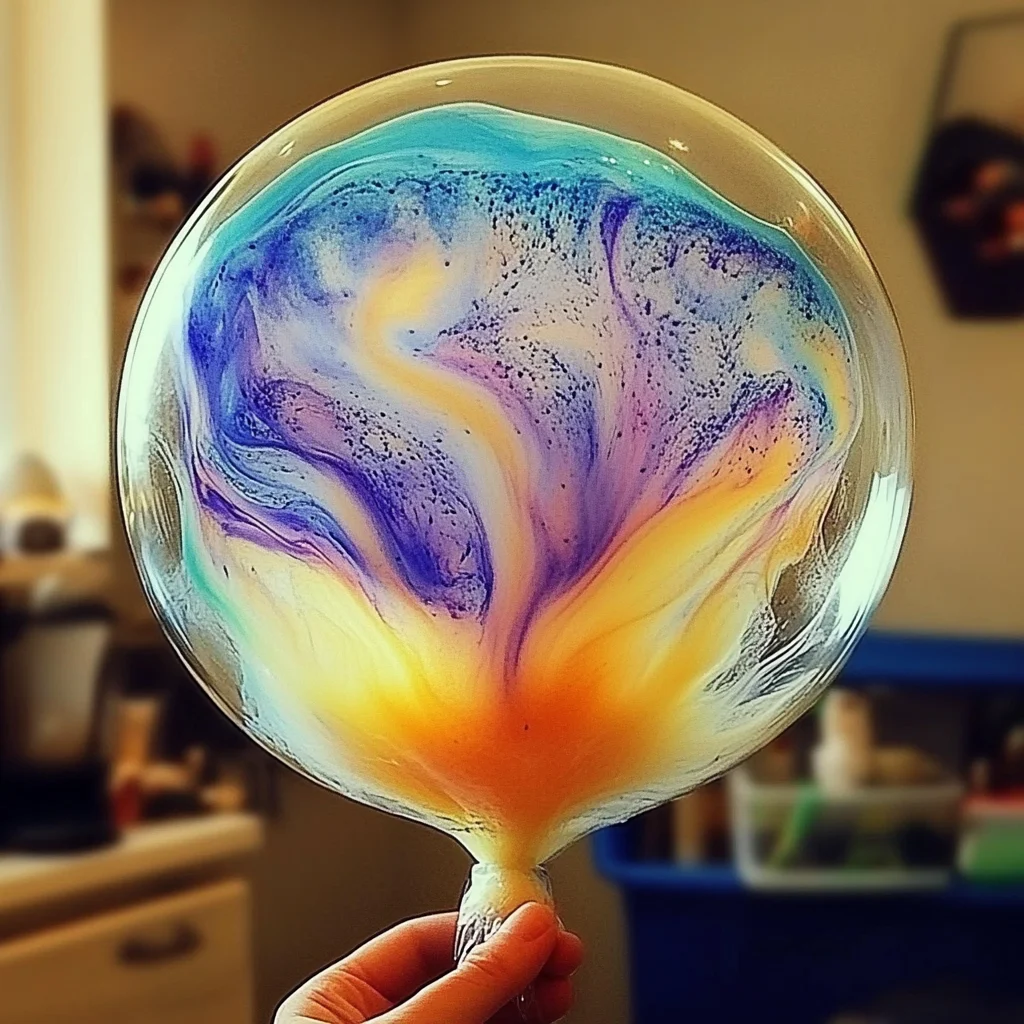
Let the Magic Happen: Now for the exciting part! Lift the balloon upright, allowing all the baking soda to tumble down into the vinegar. You’ll immediately see a chemical reaction start to happen. The baking soda and vinegar will create carbon dioxide gas, which will fill up the balloon and make it inflate all by itself!
Isn’t that neat? It’s a classic science experiment for a reason! For more simple yet amazing kitchen science, you might want to explore our DIY Baking Soda Dinosaur Eggs.
Substitutions & Additions
While this experiment is perfect as is, you can always get creative!
- Vinegar Type: While white vinegar is standard, you can experiment with other types like apple cider vinegar or even lemon juice to see if there’s a difference in the reaction.
- Baking Soda Quantity: You can try slightly more or less baking soda to see how it affects the inflation, but stick to the recommended amount for the best results.
- Bottle Size: A slightly larger bottle might allow for more gas production, but ensure it’s stable.
- Additions: Besides food coloring and glitter, you could try adding a tiny bit of dish soap to the vinegar to create a foamy reaction inside the balloon as it inflates!
Tips for Success
A little preparation goes a long way to ensure a smooth and exciting experiment.
- Mess Control: It’s always a good idea to place the bottle and balloon on a tray or in a sink to catch any potential spills or overflow, especially if you add the optional dish soap.
- Balloon Placement: Make sure the balloon opening is securely sealed around the bottle’s mouth. A loose seal means the gas will escape, and your balloon won’t inflate as much.
- Baking Soda Distribution: When adding baking soda to the balloon, try to get it into the main part of the balloon, not just stuck in the neck. This ensures it all falls into the vinegar at once for a good reaction.
- Prep Ahead: You can pre-portion the baking soda into the balloons beforehand if you’re doing this with a group. Just keep them upright until you’re ready to use them!
How to Store Balloon Inflation Experiment
Once the balloon is inflated, the chemical reaction has finished. You can tie off the balloon to keep it inflated for a little while, or let the air out. The ingredients themselves are standard pantry items and don’t require special storage. Just make sure your baking soda is kept in a sealed container to prevent it from clumping.
FAQs
- Why does the balloon inflate?
The baking soda (a base) reacts with the vinegar (an acid) to produce carbon dioxide gas. This gas has nowhere to go but up into the balloon, causing it to inflate!
- Can I use a different type of balloon?
Yes, most standard latex balloons will work. Thicker balloons might be a bit harder to inflate if the gas production isn’t strong enough.
- What if my balloon doesn’t inflate much?
This could be due to a few things: not enough baking soda or vinegar, a leak in the balloon or bottle seal, or the baking soda and vinegar are old and have lost their potency.
This experiment is a fantastic way to introduce basic chemistry concepts in a fun and engaging way. If you enjoy hands-on activities like this, you might also love our Mini Volcano Jar Science Experiment. We’re always exploring new ways to make learning fun in the kitchen and beyond, so be sure to browse our site for more creative ideas. For more science fun, check out our DIY Bioplastic Suncatchers!
Want to see more fun recipes and crafty ideas? Follow us on Pinterest!
Inflate Balloons with Science!
Ingredients
Equipment
Method
- Step 1: Load the Balloon: Grab your funnel (or paper cone) and carefully spoon 2 to 3 tablespoons of baking soda into the deflated balloon. Try to get it all the way down into the bulb of the balloon. This might take a little wiggling, but a funnel really helps!
- Step 2: Prepare the Bottle: Pour about 1/2 cup of vinegar into your plastic bottle. If you’re feeling adventurous, now’s the time to add a few drops of food coloring or a pinch of glitter to the vinegar. Give it a gentle swirl.
- Step 3: Connect the Balloon: Carefully stretch the open end of the balloon over the mouth of the bottle. Make sure it’s a snug fit so no gas escapes. You want the balloon to hang limply at the side of the bottle for now.
- Step 4: Let the Magic Happen: Now for the exciting part! Lift the balloon upright, allowing all the baking soda to tumble down into the vinegar. You’ll immediately see a chemical reaction start to happen. The baking soda and vinegar will create carbon dioxide gas, which will fill up the balloon and make it inflate all by itself!
Thank you for your sharing. I am worried that I lack creative ideas. It is your article that makes me full of hope. Thank you. But, I have a question, can you help me?
I don’t think the title of your article matches the content lol. Just kidding, mainly because I had some doubts after reading the article. https://www.binance.info/register?ref=JW3W4Y3A
Thankls ffor sharing yur thoughts bout . Regards xnxx