Ingredients
Equipment
Method
- Heat the Milk: Grab a large saucepan and pour in your milk. Set it over medium heat. You'll want to stir it occasionally with a spatula or wooden spoon, especially as it heats up, just to make sure it doesn't stick to the bottom and scorch. Keep heating until you see it just reach a gentle full boil – that's when tiny bubbles cover the surface and steam rises steadily. Once it hits that point, immediately reduce the heat to very low.
- Add Vinegar to Curdle: Slowly drizzle in the white vinegar while you continuously and gently stir the milk. As you stir, you'll literally see the milk transform! It will start to separate into solid white clumps (the curds) and a cloudy yellowish liquid (the whey). Once you've added all the vinegar and stirred for a moment, take the pan off the heat and just let it sit undisturbed for about 5 minutes. This gives the curds time to really separate nicely from the whey.
- Strain the Curds: Now, grab a bowl and set a strainer or colander over it. Carefully line the strainer with a piece of cheesecloth. Gently pour the curdled milk mixture into the lined strainer. The liquid whey will drain through, leaving the solid curds behind. Let it sit there for about 10-15 minutes to drain naturally. If you're in a bit of a hurry or want a thicker cream cheese, you can very gently gather the edges of the cheesecloth and give it a light squeeze to push out more liquid. Don't squeeze too hard, though, or you might push the curds through!
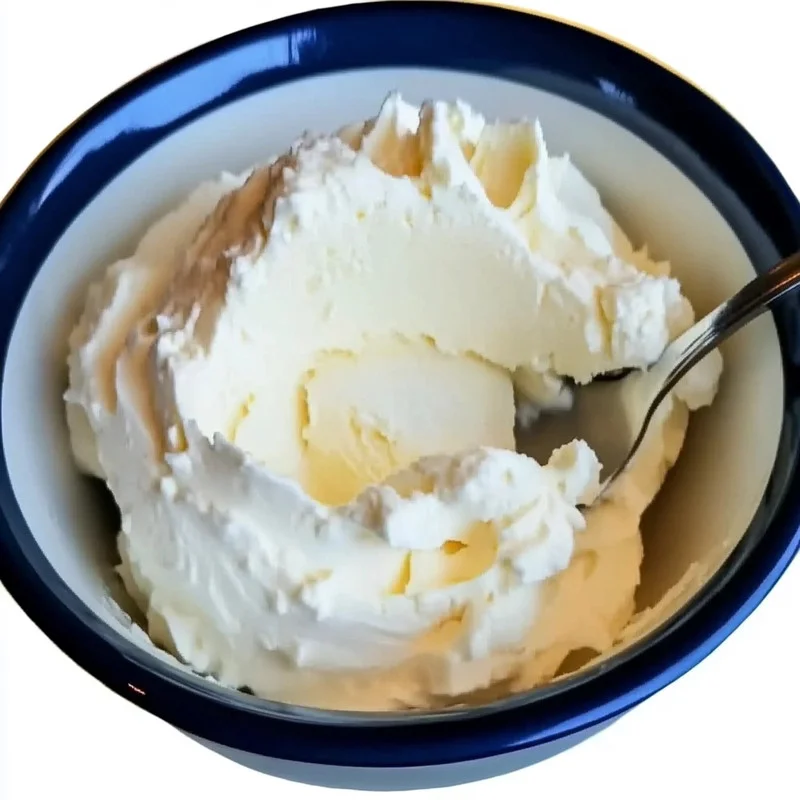
- Blend Until Smooth: Transfer those beautiful, drained curds from the cheesecloth into your food processor. Add your salt now. This is also the time to add any fun flavorings you like! Pulse the food processor a few times to break things up, then turn it on high speed and let it run for about 2-3 minutes. You'll need to stop it occasionally to scrape down the sides with a spatula to make sure everything gets blended into a super smooth, creamy consistency. Keep blending until it looks like the cream cheese you know and love!
- Chill Before Use: Once it's perfectly smooth, spoon your homemade cream cheese into an airtight container. Pop it in the refrigerator for at least 30 minutes. This chilling time is important because it helps it firm up to that spreadable consistency.
Notes
Substitutions & Additions: Lemon juice or citric acid are great stand-ins for white vinegar. For flavor boosts, add finely chopped fresh chives or dill, garlic powder and onion powder, honey or maple syrup, vanilla extract, or lemon zest. To make it richer, swap out 1 cup of the whole milk for heavy cream.
Tips for Success: Don't skip stirring milk while heating to prevent skin and sticking. Be gentle when stirring in vinegar. Let the mixture rest for 5 minutes after adding vinegar for proper separation. Drain well but don't over-squeeze curds. Blend long enough in the food processor for a silky smooth texture.
Storage: Spoon into a clean, airtight container. Store in the refrigerator. It should keep well for about 7-10 days. Always give it a quick sniff test before using.
FAQs: If milk doesn't curdle, it might not be hot enough or the acid isn't strong; try adding a little more acid. Low-fat or non-fat milk will yield less and result in a less rich texture. Leftover whey can be used in smoothies, baking, or soups. Graininess can be caused by not blending long enough or not draining enough whey; try blending more.