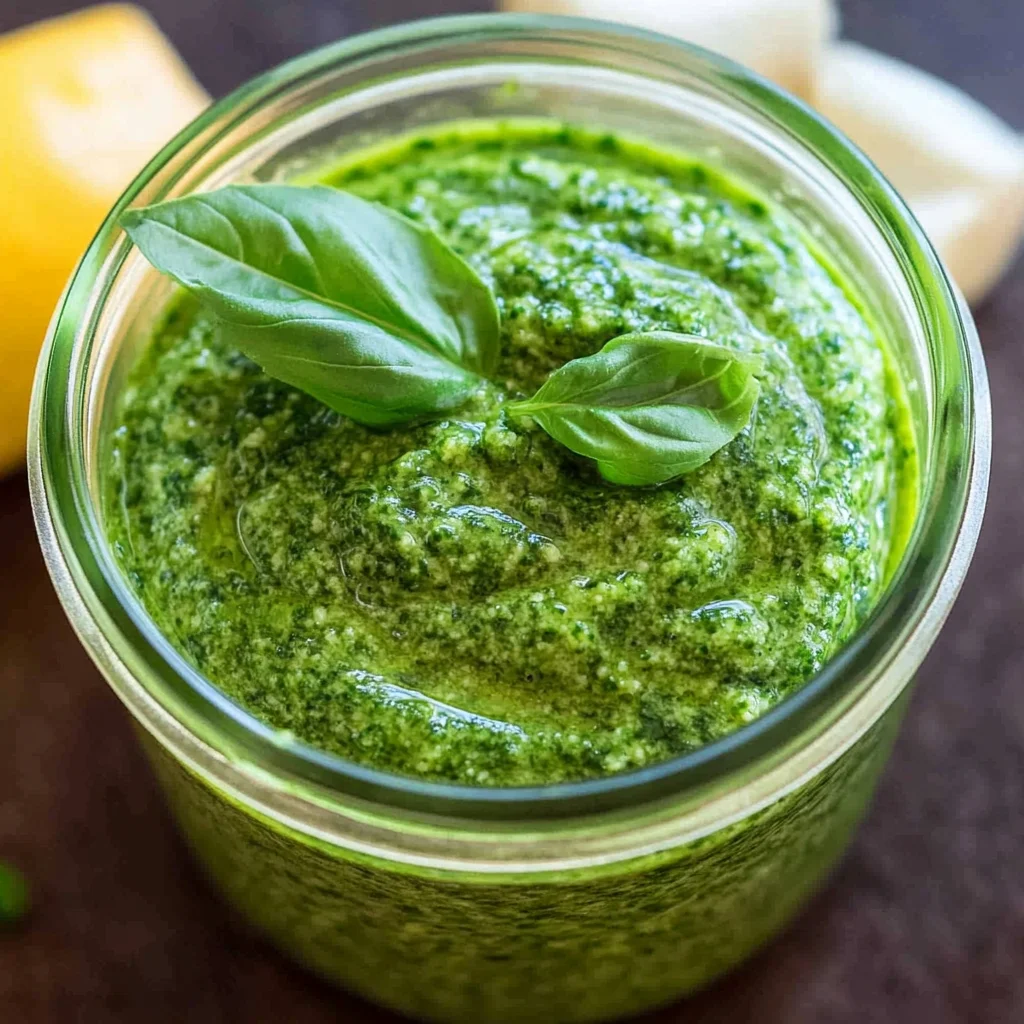
Ingredients
Equipment
Method
- Step 1: Ensure basil leaves are clean and completely dry. Use a salad spinner if you have one.
- Step 2: Add the washed and dried basil leaves, shredded parmesan cheese, pine nuts, garlic cloves, lemon juice, salt, and pepper to your food processor.
- Step 3: Drizzle in about half of the extra virgin olive oil.
- Step 4: Pop the lid on and process. Start with short pulses to break things down, then process until the mixture is roughly chopped.
- Step 5: With the food processor running, slowly drizzle in the remaining olive oil through the feed tube. Keep processing until your pesto is smooth and creamy, scraping down the sides with a spatula as needed.
- Step 6: Taste the pesto and adjust seasoning. Add small amounts of salt, pepper, or lemon juice, pulse again, and taste until perfect.
Notes
Substitutions: You can substitute pine nuts with walnuts, almonds, or pistachios. Swap some basil for spinach, arugula, or kale. Use Pecorino Romano instead of Parmesan, or nutritional yeast for dairy-free. Experiment with other mild oils. Add red pepper flakes, sun-dried tomatoes, or roasted red pepper for variations.
Tips for Success: Always use completely dry basil leaves to prevent a watery pesto. Don't over-process; pulse until desired consistency. Taste and adjust seasoning at the end. Toasting nuts first is optional but enhances flavor. Use quality ingredients as there are few in the recipe.
Storage: Store in an airtight container in the fridge for up to a week. Pour a thin layer of olive oil over the top to prevent browning. Pesto freezes well in ice cube trays or small containers for several months.